ColoringBook AI Review: Turning Imagination into Line Art (Akshat Gupta et al)
ColorBooks AI Review – Coloring Books & 3D FlipBooks Maker AI App
Welcome to my ColoringBook AI Review. I’ll cover its features, upgrades, pricing, bonuses and share my honest opinion. In a world where artificial intelligence is intersecting creativity in every dimension, coloring books are no exception. ColoringBook AI offers a platform to generate personalized coloring pages from text descriptions or photos, and even compile multi-page coloring books. This tool promises to democratize illustration and make it easy for anyone—kids, parents, educators, hobbyists—to create custom coloring content with minimal effort.
In this review, I aim to explore:
- What exactly ColoringBook AI is
- Core features and how well they work
- Pros and cons (user experience, technical, pricing, etc.)
- Use cases and target audiences
- Comparisons and alternatives
- Ethical, copyright, and business issues
- Tips and best practices
- Final verdict and recommendation

What Is ColoringBook AI?
At its core, ColoringBook AI is a web-based tool (accessible in browser) that lets users convert text prompts or uploaded images into coloring-page-style line art. Beyond single pages, it offers features to generate entire coloring books with multiple pages of consistent artwork. It also maintains a gallery of ready-to-download coloring pages, which users can print in PDF or PNG format. (coloringbook.ai)
From its official site:
- Users can upload photos and convert them into line-art versions suitable for coloring. (coloringbook.ai)
- Users can enter text (prompts) to generate custom coloring pages. (coloringbook.ai)
- It offers an “AI multi-page coloring book generator” for creating up to ~20 pages in a consistent story/character style. (coloringbook.ai)
- The site offers thousands of free printable pages in its gallery. (coloringbook.ai)
- It supports downloading the pages in PDF or PNG formats for printing. (Fueler)
Thus, in effect, ColoringBook AI acts as a “low-code / no-code illustration” engine, tailored to coloring art.


Overview – ColoringBook AI Review
Creator: Akshat Gupta et al
Product: ColoringBook AI
Date Of Launch: 2025-Oct-12
Time Of Launch: 11:00 EDT
Front-End Price: $17
Refund: YES, 30-day money-back Guarantee
Product Type: software (online)
Support: Effective Response
Discount: >> GET THE BEST DISCOUNT HERE <<
Recommended: Highly Recommended
Skill Level Needed: All Levels
Key Features — What Works, and How Well
Here I break down the main features and evaluate their performance, usability, and limitations.
1. Photo to Coloring Page / Line-Art Conversion
What it does: Take a real-world photograph (person, pet, scene) and convert it to a black-and-white line-art version that can be colored.
Why it matters: This gives users a direct way to transform personal memories into coloring art.
Strengths / What works well:
- For relatively clean, simple images (clear edges, good contrast), the conversion often produces usable line art.
- It is intuitive: upload → wait → receive coloring page output.
- Great for family photographs, pet pictures, or simple scenes.
- Works in-browser, no software installation required.
Limitations / What to watch out for:
- Complex or busy images (lots of overlapping textures, detailed backgrounds, shadows) may produce messy lines or unclear structures.
- Some details may be lost; fine textures, shading nuances may be removed or simplified.
- The AI may sometimes misinterpret or distort parts of the image.
- Cleanup (manual editing) may be necessary to polish the result for better coloring.
2. Text to Coloring Page (Prompt → Illustration)
What it does: You type a description like “a unicorn dancing under a rainbow” or “a child flying a kite in a meadow,” and the AI generates a matching line-art coloring page.
Why it matters: This is powerful for imagination-driven creation when you don’t have an image on hand.
Strengths:
- High creativity: you can conjure scenes that don’t already exist in your photo library.
- It’s ideal for thematic designs or whimsical ideas.
- Works well as a way to spark creativity in children or as prompts in a classroom setting.
Challenges:
- The AI may misinterpret some parts of the description, especially detailed or abstract instructions.
- Consistency in style (line thickness, composition) across multiple generated pages may vary.
- Achieving the “ideal” layout or arrangement may require iterations (tweaking prompt, re-generating).
- Some features or elements (e.g. intricate patterns, subtle motifs) may render poorly or be lost.
3. Multi-Page / “Coloring Book” Generator
What it does: Given a story or character outline, generate a multi-page coloring book (e.g., up to 20 pages) with consistent characters, design, and progression. (coloringbook.ai)
Why it matters: Instead of creating single pages one by one, you can produce a full cohesive book, which is useful for printing, gifting, or even publishing.
Pros:
- Streamlines the process of creating multiple pages.
- Maintains some consistency of characters and visual style across pages (though not perfect).
- Saves time as compared to manual design or sequential prompting.
Cons / Caveats:
- Consistency is imperfect—some pages may look visually different.
- Story progression, pacing, or visual narrative transitions may be weak.
- More control over layout, margin, bleed, or page order may be limited.
- Fine-tuning or post-editing may still be necessary for professional or print-worthy output.
4. Gallery / Ready-Made Coloring Pages
What it does: A library of pre-generated, downloadable coloring pages that users can browse and print. (coloringbook.ai)
Why it matters: It gives users instant access to coloring content without any creation effort.
Strengths:
- Good fallback for users who just want to download and color instantly.
- Useful for parents, teachers, or for print-at-home use.
- Variety of themes and subjects, making it easy to find suitable pages.
Potential drawbacks:
- Many pages might be generic or derivative.
- Users might find duplicates or similar motifs.
- If many people rely on the gallery, saturation and overlap in usage might reduce novelty.
5. Download / Print / Export (PDF, PNG)
How it works: Once a page is generated, you can download in PNG or PDF formats, ready for printing or sharing. (Fueler)
Assessment:
- The ability to export in both formats gives flexibility.
- PDF is preferable for print (higher resolution, vector-like).
- Users need to be aware of margins, bleed, resolution, and printer settings.
- In some cases, post-editing (cleaning lines, adjusting scaling) may be necessary for best print quality.
6. User Interface and Experience
What users see / experience:
- Clean, minimal interface with clearly labeled options. (Hickman Design)
- Accessible via browser on PC, tablet, and mobile. (Fueler)
- Buttons and menus are intuitive: upload image, input prompt, generate coloring page, download or save.
- Login/Register is optional for some functionality, but necessary to unlock advanced features or save galleries. (The AI Journal)
- Minimal tutorial or onboarding for new users; but for basic tasks, the steps are self-explanatory.
Usability observations / caveats:
- Users must have stable internet connection (it’s web-based).
- There may be a small learning curve in prompt engineering (knowing how to phrase descriptions).
- Some features may be locked behind account registration or paid tiers.
- Response time depends on server load; during peak times, generation may take longer.
7. Pricing / Monetization and Usage Limits
While many features are free or have a free quota, advanced usage often requires a paid subscription. Fueler’s review cites:
- Free monthly usage, but limited quota for free users. (Fueler)
- Advanced features, higher usage, and priority generation may require paid plans. (Fueler)
On Trustpilot, some users have criticized the transparency of billing or commitment terms. One user said:
“When subscribing to make sure my pictures were only accessible to myself … apparently you always sign up for an entire year, something which is not stated very clearly anywhere … AND there is no real customer support information anywhere…” (Trustpilot)
So, the business model seems to be a “freemium” approach, where basic features are free (or partially free), and full access requires paying. There is also suggestion of subscription commitments or locked-in periods.


Pros & Cons Summary
Here is a consolidated pros / cons breakdown:
Pros (Strengths)
- Ease of use: Very accessible for non-artists, children, or casual users.
- Creativity unleashed: Strong support for imagination (text-to-page) and personal content (photo-to-page).
- Time-saving: Multi-page generation reduces repetitive work.
- No software install: Works in-browser on many devices.
- Export flexibility: PDF and PNG downloads make printing/sharing easy.
- Gallery fallback: Users who don’t want to generate can pick from existing pages.
- Inspirational / educational: Useful in classrooms, therapy, creative activities, gift-making.
- Low barrier to entry: Free quotas let users experiment before committing.
Cons (Weaknesses / Limitations)
- Quality variability: AI may misinterpret prompts or produce flawed line art, especially in complex scenes.
- Inconsistent style across pages: When generating multiple pages, consistency may vary.
- Limited control over layout: Users may not be able to fine-tune positioning, margins, bleed, or composition per page.
- Post-editing may be needed: Especially for print-level output or cleaner lines.
- Subscription opacity / commitment concerns: Some users report unclear terms or locked-in subscriptions. (Trustpilot)
- Dependence on internet / server: No offline mode, performance depends on servers.
- Ethical / copyright concerns (discussed later)
- Competition / saturation risk: Many users may generate similar generic pages, diluting uniqueness.
Use Cases & Target Audiences
ColoringBook AI is not for one “kind” of person—it spans several audiences and use cases. Here’s who benefits most:
1. Parents & Young Children
- Activity & screen alternative: Instead of passive screen time, generate custom coloring pages for kids.
- Personalized gifts: Turn family photos into coloring art or theme pages around children’s interests.
- Learning & creativity: Encourages kids to describe scenes, think visually, and express themselves.
2. Educators & Schools
- Teachers can generate themed coloring pages to supplement lessons (e.g., animals, history, geography).
- Use prompt-based generation to tie into curricular topics (e.g., “volcano eruption line art” for geology class).
- Provide customized worksheets for students.
3. Hobbyists, Artists & Creatives
- Non-artists wanting to dabble in illustration.
- Artists who want to generate base sketches to refine manually.
- Illustrators can use the output as a starting point to color, shade, or adapt.
4. Self-Publishers / Entrepreneurs
- People creating coloring books to sell (e.g., via KDP / Amazon or print-on-demand).
- Designers of gift books, journals, merchandise.
- Small-scale publishers wanting to streamline content creation.
5. Therapists / Wellness / Mindfulness
- Coloring is often used as a relaxing, meditative activity. Custom pages can be tailored for stress-relief or therapy.
- Group sessions or workshops can use the tool to generate collaborative coloring projects.
6. Gifts, Printables & Custom Products
- Printable downloads to sell or share digitally.
- Generating custom party favors, personalized art for loved ones.

Comparison with Alternatives
When considering ColoringBook AI, it’s worthwhile to compare with other tools or methods for generating coloring pages:
Manual Illustration / Illustrator Software
- Pros: Full control, highest quality, unique style, professional polish.
- Cons: Requires drawing skill, time-intensive, steeper learning curve, software cost.
Traditional Clip Art / Stock Line Art Sites
- Download royalty-free line art pages and compile into books.
- Pros: Consistent quality, wide selection, less creative overhead.
- Cons: Lack of customization, may get repetitive, licensing restrictions.
Other AI Tools & Prompt-driven Generators
There are emerging tools (or components in larger AI platforms) that allow line-art / sketch generation. Some may allow better parameter control, style tweaking, or vector output.
- They may offer more advanced control (brush strokes, style filtering).
- Some are targeted at illustrators rather than general users.
- The tradeoff is that they may be less optimized for coloring-book tasks.
Hybrid Approaches
- Use AI to generate rough sketches, then refine in vector editors (Illustrator, Inkscape).
- Combine AI line-art output with human cleanup and finishing.
In this sense, ColoringBook AI is positioned well for general users and those wanting low-friction creation, though professional users may still prefer hybrid or manual methods for higher fidelity.
Ethical, Copyright & Business Considerations
Using AI-generated content, especially when monetizing it (e.g., selling coloring books), carries a few ethical and legal dimensions worth understanding.
1. Originality & Uniqueness
As more creators use tools like ColoringBook AI, many outputs may converge on similar motifs or scenes (e.g., unicorns, floral patterns). This reduces uniqueness and raises competition over similar content.
2. Copyright & Licensing
- Is the generated art truly “yours” to sell? Many AI tools have terms of service that define usage rights for the output. Always check the licensing for commercial use.
- If the AI is trained on copyrighted images, there is a theoretical risk (though this is a broad AI discourse topic) that it may leak derivative elements.
- Some users report that Amazon KDP flagged coloring books made with AI for copyright issues. In the KDP community, users say: “I created a coloring book with the help of AI tool. I have gone through tremendous editings. The book is blocked. The issue of highlighted was copyright content …” (kdpcommunity.com)
Thus, careful attribution (if required), editing, and ensuring originality are prudent steps.
3. Saturation & Market Competition
Simple themes (animals, fantasy, flowers) will likely get overcrowded on platforms like Amazon or Etsy. To succeed commercially, creators need niche ideas, better marketing, or unique styling.
4. Transparency & Ethics
If selling AI-generated content, is it ethical to present it as “hand-drawn” or “by an artist”? Some consumers care about the creation method. Being transparent—even “colored by AI” or “AI-assisted art”—can build trust.
5. Privacy & Data Handling
Users uploading photos (especially people, children) should be mindful of how those images are processed, stored, or used. Reviews note some opacity in how user images are handled. (Trustpilot)
6. Fair Compensation & AI Impact on Artists
As AI tools grow, there’s debate about how they affect illustrators and artists. The democratization of art is positive in many ways, but it may devalue manual artistry in some markets.
Tips & Best Practices to Get the Most Out of ColoringBook AI
If you decide to try the tool, here are practical tips to get better results and avoid pitfalls:
- Start simple
Use clean images or simple prompts. Avoid overly complicated scenes at first. - Iterate your prompt
Try multiple variations, tweak adjectives, reposition subject descriptions to get better layout. - Use contrast / pre-process images
If converting photo, adjust brightness/contrast or reduce background clutter before upload. - Post-edit when needed
Use vector editors (Inkscape, Illustrator) or raster editors (Photoshop, GIMP) to clean lines, smooth artifacts, fix stray marks. - Maintain a unique style
Add personal elements, motifs, or hand-drawn flourishes on top of AI output to differentiate your pages. - Mind output resolution
For printing, ensure high resolution and proper margins. - Test-print early
Print test pages to see how lines appear on paper—thin lines may not show well, misalignments may crop. - Organize consistent themes
When building multi-page books, choose a solid theme or character to maintain coherence. - Monitor your usage / quota
Track free usage limits and evaluate whether upgrading is worth it. - Check licensing / terms
Especially if selling, ensure your use complies with the service’s rules. - Differentiate in market
If commercializing, find a niche or specialization (e.g. coloring books for certain demographics or interests).
Real-world Impressions & User Feedback
Trustpilot Reviews
ColoringBook AI’s Trustpilot page has a modest number of reviews, rating around 3.4 / 5. (Trustpilot) Some praise the “brilliant” site for generating custom images; others complain about hidden commitment terms and lack of clear customer support.
User Forums & Reddit
In discussions around AI-generated coloring books, users share mixed views. From Reddit:
“It’s hard to get consistent styles and the quality of illustration degrades significantly over a session.” (Reddit)
“Still need some handy work to make a so-so coloring book, but somehow it’s quicker to get some 70%.” (Reddit)
Such feedback underscores that AI helps accelerate but doesn’t eliminate the need for human editing and quality control.
Blogger / Review Sites
- Fueler’s review describes ColoringBook AI as “versatile,” with praise for usability and creative potential, but notes possible learning curves and limited free usage. (Fueler)
- HickmanDesign notes the platform is intuitive and accessible, making it friendly even for beginners. (Hickman Design)
- A more promotional/overview review (on Aijourn) describes it as “fun and easy for everyone,” though such content tends toward fluffiness. (The AI Journal)
Video Reviews / Demos
- A YouTube video titled “Testing a coloring app for iPad: ColoringBook.ai review” shows the tool functioning on iPad and gives a visual sense of usability. (YouTube)
- Another video “Coloringbook.ai REVIEW” demonstrates using the tool for Amazon KDP / low-content publishing niches. (YouTube)
- Some creators express frustration when the output quality is underwhelming. For example, one video titled “This Coloring Book Made me SO Mad…” suggests disappointment and learning lessons from AI coloring experiences. (YouTube)
In sum, real users often treat ColoringBook AI as a helpful starting point rather than a one-click magical solution.

Sample Walkthrough: From Prompt to Printed Page
Here’s a hypothetical (yet realistic) workflow using ColoringBook AI, with potential hiccups:
- Brainstorm a theme — e.g. “Underwater mermaid adventure with coral reef and fish.”
- Use Text → Coloring Page — input “a mermaid swimming among coral reefs and tropical fish.”
- Generated image may show a mermaid, but perhaps fish are clustered oddly or coral is vague.
- Inspect result — decide to crop or reposition subject, or regenerate with prompt refinement (“mermaid in center, fish surrounding, clear outlines”).
- Repeat / iterate until satisfied.
- Download as PDF / PNG — select size and check margins.
- Print a test page — see line thickness, clarity, blank areas, whether details are too faint.
- Clean up in image editor (erase stray lines, thicken outlines, adjust composition).
- Assemble multiple pages into a book — using the multi-page generator, then fine-tune order, page breaks, and cover.
- Finalize for printing / publishing — check bleed, margins, save in print-ready PDF, or upload to print-on-demand platform.
This process shows that though AI accelerates many steps, there’s still human curation and craftsmanship involved.
Final Verdict & Recommendation
ColoringBook AI is a strong, user-friendly tool for generating coloring pages from text or images. It lowers the barrier to illustration generation and can be particularly empowering for parents, educators, and hobbyists. For casual or non-commercial use, the free tiers and intuitive workflow make it an appealing option.
However, for users aiming to produce professional-grade coloring books or scale commercial output, the platform’s limitations in consistency, control, and output quality mean you should treat it as a foundation, not a complete solution.
If I were to score it (out of 10) across key dimensions:
| Dimension | Score (out of 10) |
|---|---|
| Ease of Use / Accessibility | 8.5 |
| Creative Flexibility | 8.0 |
| Output Quality | 7.0 |
| Consistency & Control | 6.5 |
| Value for Price / Monetization | 7.0 |
| Uniqueness / Differentiation Potential | 6.5 |
Overall, I’d give ColoringBook AI ~7.5 / 10 as a tool in its category.
When to Use It
- For personal use, gifting, educational or creative play, it’s excellent.
- For proof of concept in creating a coloring book, or prototype design.
- As a component in a workflow: AI generate → human refine → publish.
When to Be Cautious
- If you need perfect consistency across pages or a highly polished commercial product.
- If the subscription terms or licensing are unclear or restrictive for your needs.
- If you’re generating at scale and require vector-level control or batch customization beyond what the AI allows.
If you like, I can help you compare ColoringBook AI with two or three specific competitor tools, or even help you build a niche / marketing plan if you want to sell coloring books. Would you like me to add that or convert this into a blog-ready version with images?
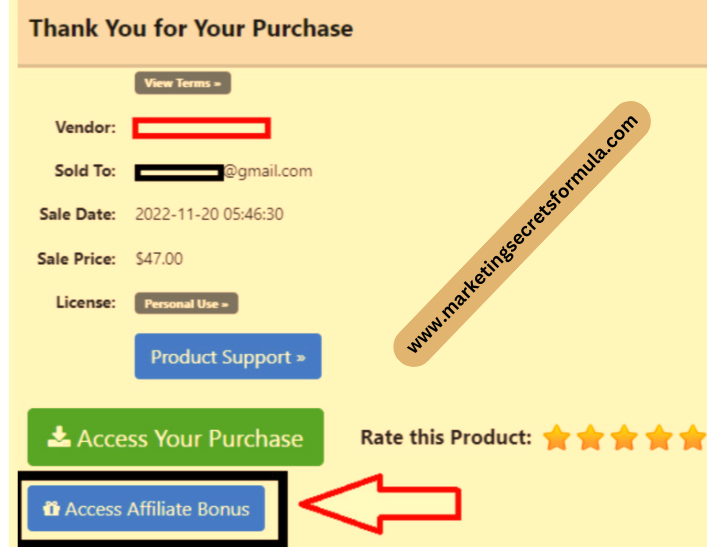
After purchasing, you’ll get my Special Bonus instantly on your access page as an Affiliate Bonus button on WarriorPlus.
Before concluding my ColoringBook AI Review, I promised to share my very Special, Unique, and developed PFTSES Formula with you for free.
 Conclusion: Is ColorBooks AI Worth It?
After diving deep into everything ColorBooks AI (also known as ColoringBook AI) offers, one thing is clear — it’s a game-changer for anyone who loves creativity but doesn’t have the drawing skills (or the time) to create every page from scratch. This platform makes it incredibly easy to bring imagination to life — from turning personal photos into line art to generating entire themed coloring books with just a few prompts.
For casual users, parents, teachers, and hobbyists, ColorBooks AI is fantastic. It’s fun, intuitive, and genuinely inspiring to use. The ability to create personalized coloring pages in minutes is something that simply wasn’t possible before AI. Kids can color themselves as superheroes, teachers can design custom class materials, and creatives can build unique gift books effortlessly.
For professionals and entrepreneurs, the story is slightly more nuanced. If you plan to publish or sell your coloring books (like on Amazon KDP or Etsy), you’ll need to invest time in editing, checking copyrights, and ensuring consistency and print quality. AI is the perfect co-pilot here — it gets you 70% of the way — but human polishing is still key to reaching the finish line.
Pros outweigh the cons, especially for creative experimentation and personal projects. However, the subscription terms, quality variability, and limited fine control may hold back serious publishers or perfectionists.
 Final Verdict:
ColorBooks AI earns a solid 7.5 out of 10.
It’s one of the most accessible and imaginative AI tools for creating custom coloring pages and books — ideal for casual creators, educators, and budding entrepreneurs who want to blend fun with productivity.
Would you like me to add a short SEO-optimized summary paragraph (meta description) for your blog post version too? It helps your article rank better on Google.
See my other reviews: MagicApps AI Review, WordsearchKDP Review, Cookify AI Review, Kiddy Store Fortune Review And AutoFace AI Review
Thanks for reading my ColoringBook AI Review to the end, and I hope it will help you make your purchase decision.
Source : ColoringBook AI Review: Turning Imagination into Line Art (Akshat Gupta et al)
Affiliate Disclaimer :
Some of the links in this article may be affiliate links, which means I receive a small commission at NO ADDITIONAL cost to you if you decide to purchase something. While we receive affiliate compensation for reviews / promotions on this article, we always offer honest opinions, user experiences and real views related to the product or service itself. Our goal is to help readers make the best purchasing decisions, however, the testimonies and opinions expressed are ours only. As always you should do your own thoughts to verify any claims, results and stats before making any kind of purchase. Clicking links or purchasing products recommended in this article may generate income for this product from affiliate commissions and you should assume we are compensated for any purchases you make. We review products and services you might find interesting. If you purchase them, we might get a share of the commission from the sale from our partners. This does not drive our decision as to whether or not a product is featured or recommended.


Comments
Post a Comment