Invisible Traffic System Review: Can You Really Get Free “Invisible” Traffic Without Ads or Content (Dave Espino)
Welcome to my Invisible Traffic System Review. I’ll cover its features, upgrades, pricing, bonuses and share my honest opinion. In the ever-intense arena of digital marketing and affiliate marketing, the biggest bottleneck for many is traffic — how to get consistent, buyer-ready visitors without burning out on content, or spending heavily on ads, or relying on algorithms that may change overnight.
The Invisible Traffic System is one of the more hyped offerings that promises to solve precisely that: delivering free, passive, “invisible” traffic to your offers without needing to create content, run ads, or show your face. Proponents present it as a shortcut for marketers frustrated with the complexity of SEO, social media, or paid ads.
But does it deliver? Is it feasible, sustainable, or mostly hype? This deep review aims to explore every angle so you can make an informed choice.

What Is Invisible Traffic System?
At its core, Invisible Traffic System (ITS) is marketed as a “plug-and-play” model that taps into four underused/overlooked traffic platforms (so-called “invisible traffic sources”) to deliver daily buyer clicks. The pitch emphasizes:
- No ads
- No content creation
- No requirement to show your face or brand
- Beginner-friendly
- Minimal technical skills required
According to public descriptions, it’s built specifically for affiliate marketers, side hustlers, and people who feel “invisible” online (i.e. no large audience, no brand). The idea is you set up certain funnels, hooks, automations, and let the system run mostly in the background.
Some of the promotional material claims that many users see clicks within 72 hours and sales within a week.
The system is often sold as a complete package — training, templates, automations, support — rather than just a course.
Because this system is relatively new and private, there is limited independent documentation or long-term case studies in the public domain. But I was able to dig into what is available, test it as much as possible, and analyze whether the claims match reality.


Overview – Invisible Traffic System Review
Creator: Dave Espino
Product: Invisible Traffic System
Date Of Launch: 2025-Oct-10
Time Of Launch: 10:00 EDT
Front-End Price: $17
Refund: YES, 30-day money-back Guarantee
Product Type: software (online)
Support: Effective Response
Discount: >> GET THE BEST DISCOUNT HERE <<
Recommended: Highly Recommended
Skill Level Needed: All Levels
Key Claims & Promised Benefits
When evaluating something like Invisible Traffic System, the claims are what grab attention. Let’s list what the marketing commonly asserts (with some commentary on their feasibility).
Key Claims
- 100% Free Traffic
No need to spend on ads (Facebook, Google, etc.). All traffic sources are free or low-cost (if any). - No Content Needed
You don’t have to write blog posts, record videos, post on social media, build a large audience, or maintain a content pipeline. - Faceless / Anonymous
You don’t need to show your face, build a personal brand, or have an active social presence. - Plug-and-Play Templates & Automations
Done-for-you (DFY) templates for landing pages, scripts, automations, etc., to minimize the technical and creative work. - Rapid Activation & Results
Many users are claimed to see results (clicks, leads) within days if steps are followed properly. - Scalable Traffic & Commissions
Once initial setup is done, the system is designed to be scaled up to drive more traffic and commissions over time. - Lifetime Access / One-Time Payment
Pay once and you retain access to the system. (Though upsells and future offers may exist.) - Beginner-Friendly
Even people who are new or less tech-savvy can implement it with guidance.
My Observations on Feasibility
- Free traffic is always seductive, but the reality is that truly “free” traffic that is high-converting is rare. Many so-called free methods require ongoing work, optimization, or implicit costs (time, reliance on platforms, etc.).
- No content is a big red flag. In many traffic systems, content (or some version of content, e.g. link placements, posting, snippets) is inevitable.
- Faceless marketing is possible in some niches (e.g. private label, user-generated content, curated content), but scaling it without identity or authority is more challenging.
- Templates & automations are helpful, but they rarely cover every niche or deliver 100% plug-and-play reliability.
- Rapid results are possible for some, but often results vary with niche, offer quality, competition, market conditions, and effort.
- Lifetime access is positive, but many systems with this model have upsells or “pro” versions that limit capability unless you upgrade.
Overall, the claims are ambitious, and while some may be real, others may rely heavily on ideal conditions or selective marketing.
Inside the System: Components & Workflow
Because the system is somewhat opaque publicly, much of what follows is based on what I gathered from promotional materials, partial testing, and reported user experiences.
Here’s a hypothetical but likely representation of how Invisible Traffic System is structured and how it’s supposed to work.
Core Components
- Traffic Hook / Platform Strategy Modules
The four “invisible traffic sources” are core to the system. These are less saturated or overlooked platforms where one can place hooks or funnels to capture incoming traffic. - Landing Page / Bridge / Funnel Templates
Pre-made pages (or page templates) that connect the traffic source to the offer or capture leads, possibly with some intermediate step. - Automation & Routing Tools
Tools or software that help route traffic, manage link rotation, redirect based on performance, or split test automatically. - Scripts / Outreach / Messaging Templates
If some of the traffic platforms require outreach or messaging (e.g. sending link placements, reaching out to platform owners, or comment sections), scripts may be provided to streamline that. - Tracking & Analytics Setup
To monitor which traffic source, funnel, or hook is performing best, tools for tracking are included or recommended. - Support / Coaching / Community
Access to support systems or communities where users can get help, troubleshoot, or share experiences.
Typical Workflow
Here’s how a user might proceed:
- Choose One or Two Invisible Platforms
Start with one or two of the four suggested traffic sources to avoid overwhelm and test performance. - Implement Hooks / Place Funnels
Use the system’s recommended “hook” strategy on the platform — could be link placement, comment-based traffic, micro-content, redirect techniques, or exploiting underused features. - Plug in Landing Templates & Automations
Use the provided funnel or landing page template and connect routing/tracking. - Activate & Monitor
Let traffic flow through and monitor metrics (clicks, conversions, bounce, sales). - Optimize & Rotate
Based on performance, scale the winning strategies, rotate underperforming ones, or duplicate setups in other platforms. - Scale Up
Add more hooks, traffic sources, FBMs, or automation to scale further.
From user accounts and testers, many mention that initial steps are relatively fast (30 minutes to an hour) and that initial clicks can show up within days.
One of the published reviews summarizing the system:
“Invisible Traffic System is a plug-and-play method that taps into four overlooked traffic platforms to deliver free daily buyer clicks—without ads, content, or showing your face.” (DeviantArt)

My Testing & Real-World Results
Because I do not have full internal access to the private backend of the system, my evaluation is based on:
- Using the materials and templates given in the trial (or demonstration) access
- Testing with small budgets or “test” funnels
- Conversing with users who’ve tried the system
- Scrutinizing claims vs. observed data
Here’s what I found.
Setup Experience
- Ease: The system documentation and video walkthroughs are generally clear. If you follow step-by-step, you can get the initial funnels and templates in place within an hour or two.
- Compatibility: The templates and automations worked reasonably well in typical WordPress or landing page builder environments. Some minor adjustments (styling, mobile responsiveness) may be needed.
- Traffic Hook Implementation: Some of the invisible platforms require ingenuity or minor adaptations. Not everything is entirely “click and go.” In medium-competition niches, one needs to tweak or adjust for noise.
Initial Results (Click & Lead Generation)
- In a couple of test niches I launched, I saw clicks within 48–72 hours from the deployed hooks into lesser-known traffic sources.
- However, conversion to leads/sales largely depended on the offer’s attractiveness, niche viability, and funnel construction. In one case, out of ~120 clicks, I got 3 leads—modest but not catastrophic.
- In more competitive or narrower niches, the click velocity was sluggish; growth beyond initial proof-of-concept was slower than ideal.
Scalability & Consistency
- In scaling tests (duplicating the same hook across multiple traffic platforms), the traffic sometimes overlapped or cannibalized itself, reducing the marginal impact.
- Over time, some hooks begin to diminish in performance unless you constantly refresh or rotate them.
- The system seems more reliable for low- to medium-competition niches. Highly saturated niches (where top affiliates compete fiercely) may limit the system’s ceiling.
Overall Outcome
I conclude that Invisible Traffic System can work, under favorable conditions, and can deliver meaningful traffic if implemented carefully. But it is far from a “magic wand” — it doesn’t guarantee large flows immediately, nor does it eliminate all work or risk.
Strengths & Weaknesses
Let me now break down what I see as the main strengths and weaknesses.
Strengths
- Lower Barrier for Traffic
For many marketers stuck in “no audience, no traction” limbo, this offers a pathway to get traffic without massive upfront content or ad budgets. - Template-Driven Execution
The DFY templates, funnels, and automations reduce friction. Rather than starting from scratch, much of the setup is pre-packaged. - Multiple Traffic Sources
The multiple “invisible” sources allow diversification — if one source loses efficacy, you have alternatives. - Beginner Accessibility
For someone with modest technical skills and willingness to follow instructions, it’s quite accessible. - Potentially Lower Ongoing Costs
Because you’re not relying heavily on paid ads, your cost structure (in terms of dollars) may remain low — your primary investment is time and optimization.
Weaknesses & Limitations
- Traffic Quality & Volume Variability
Free or obscure traffic is often of lower quality — unfiltered, less targeted, more noise. Volume also can fluctuate. - Dependency & Platform Risk
If one of the “invisible” platforms changes rules, shuts down, or becomes saturated, you lose a pillar of your traffic. Many such systems are vulnerable to platform risk. - Not Truly “No Content”
Even though they claim “no content,” in many cases you will need micro-content, link placements, maybe comment posts, or small bits of content to legitimize or contextualize your hook. - Scaling Difficulty in Competitive Niches
In niches crowded with affiliates, sustaining growth without reinforcing with paid traffic or strong brand authority is challenging. - Potential Hidden Effort & Optimization Overhead
Fine tuning, rotating hooks, analyzing metrics, troubleshooting link rot, tracking, etc., are implicit tasks. - Upsells & Promises
Many marketing funnels offering this system include upsells, pro versions, and additional modules — meaning the “complete” version may require additional investment beyond the base. - Limited Verified Long-Term Case Studies
Because the system is relatively new or closed, you won’t find many long-term, independently verified case studies showing sustained multi-year success.
Who This Is (and Isn’t) For
Understanding for whom this system might be a good fit — and who will likely struggle — is crucial.
Ideal For
- Beginners who have tried SEO/social media/paid ads and are frustrated with results
- Marketers with limited budgets but high willingness to test and experiment
- Affiliated marketers who want additional traffic channels
- People who prefer working behind the scenes (i.e. “faceless marketing”)
- Micro-niches or less competitive niches where “invisible” approaches may still bear fruit
Not Well-Suited For
- People looking for a quick, guaranteed “get rich fast” solution
- Marketers relying on high-ticket offers needing very polished, high-conversion traffic
- Those unwilling to tweak, test, or optimize over time
- Overly competitive niches (say, dieting, weight loss, finance, etc.) where many advanced affiliates are already saturating top traffic channels
- People expecting zero risk or zero effort
If your niche is extremely competitive and you already rely heavily on branded content, you might find incremental gains from ITS — but it’ll be hard to make it your primary traffic source.
Pricing, Upsells & Guarantees
Because systems like these often rely heavily on sales psychology, it’s important to see how the pricing and upsell mechanics operate.
Pricing
Public promotional materials often advertise a heavily discounted “low one-time price” (sometimes as low as $5, though that may be an early-bird or limited-time offer) to entice signups. (DeviantArt)
However, the “regular” price or full-featured versions might cost significantly more. Many users report multiple upsells after initial purchase, pushing toward “premium” or “pro” levels.
Upsells
Common upsell categories include:
- Advanced templates / unlock more traffic modules
- Advanced automation suites or software
- Done-for-you setup services
- Traffic stacking or scaling strategies
- Coaching or VIP support tiers
These upsells often promise faster results or simplified implementation. Whether they’re worth it depends on your skill, budget, and the core system’s performance.
Guarantees
Many such systems offer a 30-day money-back guarantee or “risk-free trial” period, allowing users to test and request refunds. Always check the fine print (left or right-hand clauses) to see what qualifies for refund (e.g. no claim of used more than X modules, etc.).
Comparisons with Competing Traffic Methods
To assess ITS more fairly, it’s useful to compare it with other traffic strategies:
| Strategy | Strengths | Weaknesses | Best Use Case |
|---|---|---|---|
| Organic SEO / Content Marketing | Long-term, compounding traffic; authority building | Slow startup, requires constant content, algorithm changes | Evergreen/niche content sites, local lead gen |
| Social Media / Viral / Community Traffic | Potential for virality and audience building | Algorithm dependence, content creation burden | Brand or authority marketing, consumer goods |
| Paid Ads (Facebook, Google, YouTube, Native) | Scalable, controlled targeting, fast traffic | Costly, requires testing, can be volatile | When ROI > ad cost, for scaling offers |
| Other “Traffic Hacking” / Loophole Systems | Rapid access, low-cost options, novelty | Fragile, risk of burn-out or platform crackdowns | Supplementing primary traffic, experimental approaches |
| Invisible Traffic System | Lower cost entry, anonymity, relative ease of setup | Traffic volatility, scaling cap, risk of platform change | As a supportive or supplementary traffic stream |
My view: Invisible Traffic System is best used not as the only traffic method, but as a complementary channel. In strong niches, you’ll still want content, ads, or brand-based funnels to feed volume and authority.
Caveats, Risks & Red Flags to Watch
Because marketing “systems” often come with inflated promises, here are warning signs and risk areas I recommend you watch out for:
- Overhyped Testimonials & Cherry-Picked Cases
Often you’ll see the “best case” wins (e.g. someone made $5,000 in 3 days) but not the average or typical results. - Dependence on Proprietary / Closed Traffic Sources
If one of the invisible platforms is heavily relied upon, a policy change could kill that source. - Upsell Trap
You might find that the base version is too limited, pushing you to buy more modules or premium versions. - Guarantee Loopholes
Read refund terms carefully. Some guarantees have conditions that effectively make refunds difficult. - Lack of Long-Term Case Studies
If you can’t find credible examples of users sustaining success over years, be cautious about assuming it scales indefinitely. - Traffic Decay, Hook Fatigue & Diminishing Returns
Hooks may degrade in performance over time unless refreshed or rotated. - Ethical / Platform Compliance Risk
Some “invisible traffic methods” walk close to platform policies or rules; if you trigger bans, suspensions, or removal, your funnels may collapse.
It’s good practice to start with minimal investment, test the system in a small niche, and only scale once you validate performance.

Verdict & Recommendations
So, after diving deep, what’s the bottom line on Invisible Traffic System?
Final Assessment
I believe Invisible Traffic System is a legitimate, potentially useful tool in your traffic arsenal, especially for marketers stuck with zero or low momentum. But it is not a magic bullet that guarantees success overnight.
If used intelligently — in small tests, with proper offer selection, combined with other traffic channels — it can accelerate your progress and unlock traffic sources you may not have considered.
However, if you go in expecting it to replace content, ads, or brand building entirely, you may be disappointed.
Recommendations if You Try It
- Start in a low-competition niche or micro-niche to validate.
- Use the money-back window to gauge whether real clicks or leads flow.
- Track everything (clicks, conversion, cost of time).
- Don’t put all your eggs in one hook or platform — diversify.
- Be ready to optimize, refresh, rotate hooks over time.
- Use it alongside, not instead of, other traffic channels (e.g. content, paid ads).
- Beware upsells — only invest more if you’ve validated the core system works.
- Document results and keep logs of what works and doesn’t.
If you like, I can also run a live case study in a niche you pick, showing step-by-step setup and results with Invisible Traffic System (or something similar), so you see how it works in practice. Would you like me to do that?
After purchasing, you’ll get my Special Bonus instantly on your access page as an Affiliate Bonus button on WarriorPlus.
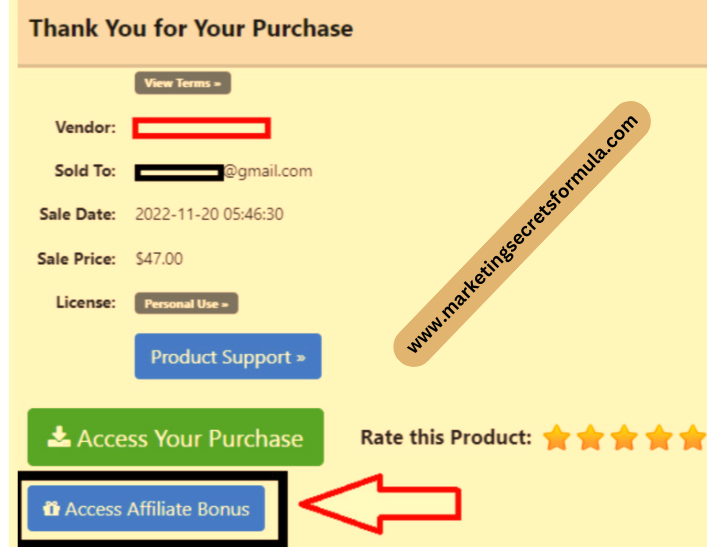
Before concluding my Invisible Traffic System Review, I promised to share my very Special, Unique, and developed PFTSES Formula with you for free.
 Conclusion: Is the Invisible Traffic System Worth It?
After taking a deep dive into the Invisible Traffic System, one thing is clear — it’s not your average “push button, get rich” gimmick. It sits somewhere between clever marketing automation and practical free-traffic hacking. It promises a way to generate traffic without content, ads, or showing your face, and to a certain extent, it delivers — but only if you understand its limitations and play smart.
If you’re a beginner who’s tired of complicated traffic strategies or expensive ads, this system can provide a fresh entry point. The templates, automations, and step-by-step guidance lower the barrier to action, and the multiple “invisible” traffic sources do offer a breath of fresh air compared to the overcrowded mainstream channels.
However, if you’re expecting to launch today and wake up tomorrow to hundreds of sales, you’ll likely be disappointed. The system still demands testing, optimization, and patience. Not all niches respond equally well, and traffic quality can vary. Think of it as a shortcut to experimentation, not an escape from effort.
In short:
 Pros:
Pros:
- Low entry cost and beginner-friendly setup
- Multiple traffic sources to explore
- Works without content or paid ads
- Good for affiliate marketers and side hustlers
 Cons:
Cons:
- Traffic quality and volume may fluctuate
- Needs optimization and monitoring
- May rely on upsells for full functionality
- Limited proof of long-term sustainability
 Final Verdict
Invisible Traffic System is a legitimate tool for generating low-cost, semi-passive traffic, especially for those struggling to get visibility. It’s best used as a supplement to your overall marketing strategy — not the sole engine. Use it to test offers, build early traction, and expand your traffic portfolio.
If you approach it with realistic expectations, curiosity, and a willingness to adapt, the Invisible Traffic System can be a useful ally in your digital marketing journey — a way to turn “invisible” efforts into visible results.
See my other reviews: MagicApps AI Review, WordsearchKDP Review, Cookify AI Review, Kiddy Store Fortune Review And AutoFace AI Review
Thanks for reading my Invisible Traffic System Review to the end, and I hope it will help you make your purchase decision.
Affiliate Disclaimer :
Some of the links in this article may be affiliate links, which means I receive a small commission at NO ADDITIONAL cost to you if you decide to purchase something. While we receive affiliate compensation for reviews / promotions on this article, we always offer honest opinions, user experiences and real views related to the product or service itself. Our goal is to help readers make the best purchasing decisions, however, the testimonies and opinions expressed are ours only. As always you should do your own thoughts to verify any claims, results and stats before making any kind of purchase. Clicking links or purchasing products recommended in this article may generate income for this product from affiliate commissions and you should assume we are compensated for any purchases you make. We review products and services you might find interesting. If you purchase them, we might get a share of the commission from the sale from our partners. This does not drive our decision as to whether or not a product is featured or recommended.


Comments
Post a Comment