MagicApps AI Review: Build and Launch AI-Powered Apps in Minutes Without Writing a Single Line of Code
Welcome to my MagicApps AI Review. I’ll cover its features, upgrades, pricing, bonuses and share my honest opinion. The world of AI is evolving rapidly. What used to require heavy engineering, sophisticated models, and complex setups is increasingly being made accessible to non-technical creators through no-code and low-code platforms. One of the newer entries riding this wave is MagicApps AI — a platform promising to let you build, launch, and monetize AI-powered apps (and SaaS) in minutes, without writing code.
But like all bold claims, the real question is: does it truly deliver? Is MagicApps AI an effective tool, or merely marketing hype?
In this review, I’ll walk through:
- What MagicApps AI is (and isn’t)
- How it works — step by step
- Key features & capabilities
- Real user experience, pros & cons
- Use cases & target users
- Pricing, upgrades, and value
- Comparisons with alternatives
- Tips, best practices, and pitfalls
- Verdict: Should you try it?
- Frequently asked questions

What is MagicApps AI?
At its core, MagicApps AI is a no-code / low-code platform that allows users to create AI-driven applications (or micro-SaaS tools) without having to program. You pick from templates, customize, brand, and launch — oftentimes within minutes. The promise includes white-label rights, monetization support, and the ability to embed, sell, or manage multiple client apps.
According to multiple online reviews, MagicApps AI is marketed as a tool to help “create 270+ ready AI apps in minutes” and to “auto-create 100% white-labeled AI apps” for users. (Leo’s Newsletter)
Certain versions of its promotional pages and reviews highlight that it offers 5 ready-to-launch SaaS kits (such as for funnels, video, and image tools) that are fully customizable with your branding. (Tika Review)
It aims to be a bridge for non-technical entrepreneurs (or small agencies) who want to get into building AI tools quickly, without dealing with backend infrastructure, servers, AI model deployment, or engineering resources.
It is important to note that MagicApps AI is not focused on creating highly customized AI models from scratch. Instead, it offers ready-made templates, configuration layers, branding options, and deployment frameworks built on top of existing AI engines or APIs, such as GPT, image-generation models, and others. The true value of MagicApps AI lies in its packaging, automation, and monetization capabilities.


Overview – MagicApps AI Review
Creator: Pranshu Gupta
Product: MagicApps AI
Date Of Launch: 2025-Oct-07
Time Of Launch: 11:00 EDT
Front-End Price: $17
Refund: YES, 30-day money-back Guarantee
Product Type: software (online)
Support: Effective Response
Discount: >> GET THE BEST DISCOUNT HERE <<
Recommended: Highly Recommended
Skill Level Needed: All Levels
How It Works — Step by Step
Here is a typical user journey (gathered from reviews, tutorials, and demos) for building an AI app with MagicApps AI:
Step 1: Sign Up / Access Dashboard
You register, get access to a user dashboard. There you see a library of templates, your app workspace(s), settings, etc.
Step 2: Pick a Template
You browse among the available templates (niches like marketing copy generator, image generator, funnel builder, content ideation, etc.). Some sources mention “270+ ready-to-use AI app templates.” (Tika Review)
Step 3: Customize & Brand
You replace default logos, names, color schemes, domain (or subdomain) with your own. You adjust the prompt text, instructions, UI copy, settings, etc. Some tweaks are possible to tailor the app behavior.
Step 4: Configure Monetization / Access
You connect payment gateways (Stripe, PayPal, etc.), set subscription or one-time pricing, access control. In some plans, you enable commercial licensing so you can resell or license the app to others.
Step 5: Launch / Deploy
You publish the app. The platform handles hosting, infrastructure, model backend (or API interactions). The app becomes accessible via a link, possibly embeddable via one-line embed code, or usable independently.
Step 6: Manage & Scale
You can access analytics, manage user accounts, monitor usage, and oversee client dashboards if you are reselling to others. Additionally, you have the ability to clone, update, or enhance functionality. Integration with other systems such as email and CRM, as well as localization for different languages, may also be available.
In a demo video titled “MagicApps AI Review Tutorial (2025)” one sees the platform in action — picking templates, customizing UI, and deploying apps. (YouTube)
Also, some reviews mention that with MagicApps AI, setup time from idea to live app can be as low as “60 seconds” in ideal cases. (Tika Review)
Key Features & Capabilities
MagicApps AI packs in a lot (or promises a lot). Below is a breakdown of the most frequently cited features, along with commentary on real feasibility or limitations.
| Feature | Description | Observations / Caveats |
|---|---|---|
| Template Library | Collection of ready-made AI app templates across niches | Multiple sources say “270+ templates” (Tika Review) |
| White-Label / Branding | Users can brand apps with their own logo, domain, colors | Important for agencies/resellers |
| Monetization Integration | Payment gateway setup (Stripe, PayPal) for subscriptions or one-time sales | Critical for turning apps into revenue streams |
| Client / Multi-App Management | Ability to manage multiple apps, assign apps to clients, dashboards | Useful for agencies or those building for others |
| Embedding & Deployment | Embed apps into websites/funnels with one-line code | Mentioned in reviews as a convenient capability (Leo’s Newsletter) |
| Localization / Multi-Language Support | Support for apps in various languages | Helps global reach |
| AI Prompt / Logic Customization | Ability to tweak how the AI behaves — e.g. prompt templates, system messages, input/output settings | Crucial for usability and differentiation |
| SaaS Kits / Prebuilt Businesses | Complete turnkey kits (funnels, sales pages, branding assets) ready to roll | Many reviews mention 5 kits included (Tika Review) |
| Scalability / Unlimited Use | Ability to scale, host many apps, support many users | Dependent on plan/upgrade |
| Analytics & Usage Tracking | Monitoring user behavior, usage patterns, performance | Important to gauge traction |
| Support & Updates | Customer support, platform updates, bug fixes | As with any SaaS, crucial component |
From hands-on user accounts, some positive notes:
- The customization interface is often described as “smooth”, “intuitive”, “buttery” (Tika Review)
- Embedding works without complex configuration, making it easy to place apps inside funnels or websites (Leo’s Newsletter)
- The onboarding/demo process can be quite speedy — some users claim they built and launched apps within minutes or a couple of hours (Charlotte’s Review)
However, users also mention some limitations or friction in advanced features, template constraints, or performance under heavy load (especially in upgraded tiers). (Facebook)

Real User Experience: Pros & Cons
Pros (What MagicApps AI Does Well)
- Speed & Efficiency
One of the major selling points — you can go from idea to a live AI app in a very short time. For simple templates, some users report doing that in under an hour. (Charlotte’s Review) - Ease of Use (Minimal Technical Barrier)
Because it’s designed for non-technical users, the learning curve is relatively gentle. The interface and configurations are abstracted in simple terms (branding, prompt text, domain). Users with no coding background have claimed success. (Charlotte’s Review) - White-Label Freedom
Many reviewers appreciate that the apps you build are yours: no platform branding, full control, you can resell them or use them in client work. (Leo’s Newsletter) - Template Variety
The breadth of templates claimed (270+) gives you lots of starting points and reduces the ideation burden. For someone unsure what app to build, having many niche templates is helpful. (Tika Review) - Monetization Built-In
Rather than handing you an app and leaving the monetization mechanics for you to figure out, MagicApps AI attempts to integrate payment, subscription logic, and licensing inside the platform. - Scalability Potential
If the platform is robust, it allows you to build multiple apps, serve multiple clients, and scale your AI tool business without managing infrastructure.
Cons (Challenges, Risks, and Limitations)
- Template Lock-In / Limited Customization
While templates are convenient, they may have constraints. If you want highly custom flows, UI, or logic beyond what a template supports, you might bump into limitations. - Performance / Reliability Under Load
Users have sometimes reported bugs, slow response times, or freezes when the app is under stress. One early version of a “MagicApp – AI Art generator” even had bug complaints. (Google Play)
Some reviews mention issues with apps freezing or otherwise misbehaving. (Google Play) - Advanced Features in Upgrades Only
Many robust features (e.g. unlimited apps, advanced AI training, more embedding options) are locked behind upsells or higher-tier plans. Some users feel the base plan is too limited. (Leo’s Newsletter) - Support & Maintenance Dependency
Because you depend on the platform’s backend and support, if it goes down, experiences bugs, or declines in quality, your apps are affected. You don’t control the core infrastructure. - Competition & Saturation Risk
If many users use the same templates or niches, oversaturation may occur. Differentiation becomes harder if everyone uses essentially the same app “shells.” - Cost / Pricing Escalation
If initial pricing is low (often a promotional front-end), there may be hidden costs or future increases, especially for upgrades. Some skeptics warn of “bait-and-switch” feeling. (deviantart.com) - Dependence on Underlying AI / API Costs
The platform must handle API calls (to GPT, image models, etc.), which are not free. They may throttle or restrict usage, or pass costs through to you. The economics must make sense. - Learning Curve for Real Profitability
While getting an app live is fast, turning it into a sustainable revenue-generating SaaS or client tool is not trivial. You’ll still need marketing, customer support, iteration, and niche focus. - Data Privacy & Security Concerns
Because the backend handles data, user inputs, API keys, etc., any vulnerability in the platform can expose user data. Your data control might be limited. Also, if the platform does not encrypt data or has weak security practices, that’s a concern.
Use Cases & Target Users
Who is MagicApps AI good for? And who should probably steer elsewhere?
Ideal Users / Use Cases
- Aspiring SaaS Builders / Solopreneurs
If you’ve got ideas for micro-SaaS tools (e.g. niche content generator, local business assistant, marketing helper), but lack coding skills or resources, MagicApps AI lets you bootstrap quickly. - Freelancers / Digital Agencies
You can build white-labeled AI tools for clients, adding AI-powered perks to your offerings, with minimal dev overhead. - Content Creators / Marketers
Useful to spin up custom assistants (copywriter, image generator, content ideator) to help in your workflows or to package and sell to others. - Side Hustle / Passive Income Seekers
Use the platform to build AI micro-tools, embed them on sites, charge subscriptions, or upsell services. - Testing & Validation
For MVPs: before investing in full custom development, you can test viability using MagicApps AI to validate demand.
Not Ideal / High-Risk Users
- Highly Complex AI Applications
If your app needs custom deep-learning models, real-time data processing, complex workflows, or domain-specific integrations, MagicApps AI’s template-based approach might be limiting. - High-stakes Industries
In regulated industries (healthcare, finance, legal) where data security, compliance, traceability, and explainability are essential, relying on a third-party platform may be risky. - Long-term Ownership / Control Seekers
If you want full control over infrastructure, scaling, and customization, building your system or hiring dedicated devs may still be preferred. - Heavy Usage / High Performance Requirements
If you expect huge user volumes or require extremely low-latency responses, platform dependencies may bottleneck you.
Pricing, Upgrades & Value
Pricing is a critical factor, and for no-code AI platforms, the devil is often in the fine print.
From promotional materials and reviews:
- The front-end (lowest) version is often offered for a nominal price (e.g. $17 in some promotions) to gain access. (Tika Review)
- There are multiple One-Time Offers (OTOs) or upgrades: “Unlimited,” “Enterprise,” “DFY (Done-For-You),” “Automation,” “Traffic,” “Agency,” “Reseller,” and “MegaSuite” in various price tiers. (Leo’s Newsletter)
- The upgrades unlock additional features like more client workspaces, embedding more Copilots, advanced AI models (e.g. GPT-4), custom training, unlimited app creation, and advanced traffic / marketing features. (Leo’s Newsletter)
- In some user stories, the “low front-end price” is highlighted as a bargain, but the total cost increases as you stack upgrades. (Charlotte’s Review)
Given that, value depends heavily on whether you:
- Actually use the higher-tier features
- Successfully monetize your apps
- Avoid being overly dependent on upsell pressure
If you can build a few apps and recoup your cost (or much more) quickly, the ROI can be favorable.
One caution: promotional “$17” offers often have limited availability, and may not last. Be careful to read fine print and refund policies.
Alternatives & Comparisons
To evaluate MagicApps AI, it helps to see what else is out there in the no-code AI app / automation space:
- Bubble + AI plugins / Extensions: Bubble is a well-known visual web app builder. You can integrate it with OpenAI or other AI APIs to build custom tools. More flexible but more manual work.
- Glide, Adalo, Thunkable + AI integrations: These mobile / web app makers allow embedding AI features using APIs or plugins.
- Voiceflow: Useful for building conversational AI applications or chatbots. Less focused on full micro-SaaS apps.
- Appsmith, Retool: For internal tools and dashboards. Less “AI app to sell,” more “tool to build internal systems.”
- Custom development with AI APIs: Hire developers to build bespoke apps using OpenAI, HuggingFace, etc. Pros: total control. Cons: cost, time, overhead.
- Other no-code AI platforms / startups: New ones emerge often, claiming rapid app generation. (Some of these may be direct competitors to MagicApps AI.)
Compared to many alternatives, MagicApps AI’s value proposition is bundling:
- Template library
- White-label deployment
- Monetization mechanisms
- Ease of use
If that stack is valuable to you (especially if you’re less technical), it can beat the alternatives for speed and lower barriers.
However, in custom or high-scale cases, a hybrid of no-code + custom code might outperform any pure no-code platform.

Tips, Best Practices & Pitfalls
If you decide to try MagicApps AI (or a similar tool), here are tips and caveats to make the most of it:
Tips & Best Practices
- Start with a narrow niche
Don’t try to build a giant all-in-one tool immediately. Pick a specific problem and solve it well (e.g. “ad copy generator for local businesses”). - Customize prompts / logic
Don’t leave the default prompts. Tailor prompt engineering to your niche. Even small tweaks differentiate you. - Branding & Differentiation
Use unique UI, branding, naming, and presentation so your apps don’t look like clones of others. - Embed strategically
Use embed code in your existing funnels, blogs, or landing pages. This helps drive leads, show demos, and convert users. - Offer freemium / trial
Let users try a limited version of the app; then upsell the full version or more features. - Collect user feedback early
Use ratings, surveys, or direct feedback to improve prompt logic, UI, or add features. - Monitor usage and costs
Watch API usage (if exposed), server costs, and performance to avoid surprises. - Plan for scaling / exit
Even if you start with MagicApps AI, have a roadmap for migrating to custom apps if needed. Don’t build yourself into a platform lock.
Pitfalls & What to Avoid
- Don’t overspend on upgrades early
Make sure you’ve validated demand before buying expensive upsells. - Watch for hidden limitations
Features like API access, client quotas, or bandwidth may be capped. - Avoid saturated niches
If too many people are building “Instagram caption generator,” compete on quality, niche, or feature. - Dependence risk
If the platform falters or ceases operations, your apps may break. Have backup plans or data exports if possible. - Underestimating marketing / support
Building apps is part of the work — acquiring users and serving them matters more in the long run. - Neglecting legal / compliance issues
If your apps handle user data, make sure terms, privacy, and data policies are in place. Ensure you’re compliant (especially if you operate in regulated jurisdictions).
Verdict: Is MagicApps AI Worth It?
After assessing features, user experiences, trade-offs, and alternatives, here’s my conclusion:
Yes — with conditions.
MagicApps AI offers a compelling value for non-technical creators who want to leap into the AI app / SaaS world quickly. The “launch in minutes” promise, white-label rights, templates, and monetization support make it a tasty option. If you execute well, you can likely recoup costs swiftly.
However, it’s not a magic bullet. You still need to pick a niche, market your product, support users, and iterate. The limitations on customization, dependency on the platform, and possible performance bottlenecks mean it’s best regarded as a jumpstart platform — not a forever architecture (unless it becomes extremely robust).
So if you:
- Are an entrepreneur or agency wanting to test AI product ideas
- Lack coding skills or dev resources
- Want speed to market
- Are comfortable with some trade-offs
Then MagicApps AI is worth a try (especially if there’s a low-cost entry or trial). Just treat it as a tool — not a guarantee. Use it to validate your concept, make revenue, and later decide whether to migrate to a more flexible architecture.
If, however, you need full control, expect massive scaling, or operate in high-regulation fields, you may prefer building custom or hybrid solutions.

10. FAQs & Additional Considerations
Q: Can complete beginners use it successfully?
A: Yes — many users claim they had little to no coding experience and still launched apps. (Charlotte’s Review) But success still requires some learning and iteration.
Q: Is there a free trial or money-back guarantee?
A: Some reviews mention a 30-day guarantee. (Tika Review) You should check current terms on their website.
Q: Can I export or migrate my app away from MagicApps AI?
A: That depends on the platform. Best to clarify exportability, ownership, and data portability before committing.
Q: How many apps / users can I host?
A: This depends on your plan (especially the upgrade levels). Lower tiers may cap the number of apps or client seats.
Q: What kinds of AI models / APIs does it use (e.g., GPT-4, image models)?
A: The marketing material hints at “advanced GPT models” for higher tiers in upgrades. (Leo’s Newsletter) It’s likely the platform wraps external AI APIs or models under the hood.
Q: What about security and privacy?
A: Because the backend handles data, it’s crucial to ask about encryption, data policies, access controls, and how they store or use user input. The risk is that sensitive user data may be exposed if the platform is weak.
Q: Could the platform become obsolete?
A: All SaaS and AI tools carry that risk. It’s wise to have contingency plans, exports, or the ability to rebuild in the future.
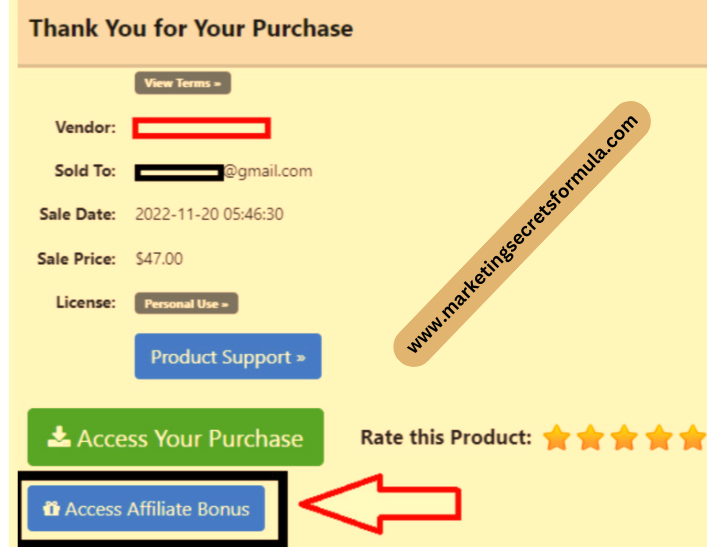
After purchasing, you’ll get my Special Bonus instantly on your access page as an Affiliate Bonus button on WarriorPlus.
Before concluding my MagicApps AI Review, I promised to share my very Special, Unique, and developed PFTSES Formula with you for free.
If you like, I can turn this into a polished blog post (with a more narrative style, introduction/conclusion, images, etc.) tailored to your target audience (e.g. tech entrepreneurs, Bangladesh readers). Do you want me to prepare that for you?
Here’s a refined conclusion you can use (or adapt) for your blog post on MagicApps AI Review:
Conclusion
MagicApps AI is a compelling bridge for non-technical creators to move quickly into the AI-app / micro-SaaS space. Its promise — “launch AI apps in minutes” — has real merit, thanks to its template library, white-labeling, and monetization features. For many entrepreneurs, agencies, or side hustlers, it represents a low-cost, low-barrier way to test ideas, validate demand, and generate revenue without hiring developers.
However, it is not a silver bullet. The trade-offs matter:
- You may bump into template limits or customization constraints.
- Performance, reliability, and scalability depend heavily on the underlying platform (which you don’t control).
- Upgrades may be necessary to unlock key features, and costs may escalate.
- Your success will hinge more on your niche choice, positioning, marketing, and user feedback than on the platform itself.
In short: use MagicApps AI as a launchpad rather than a permanent foundation. If you treat it as a prototype or MVP tool, use it to build momentum, learn from users, and test your monetization strategy, it can deliver outsized value for low risk. As your product matures and your user base grows, you can choose to migrate to more flexible or custom infrastructure if needed.
If you’d like, I can craft a polished closing paragraph tailored to your blog’s voice (or to readers in Bangladesh, or technical vs non-technical audiences). Do you want me to generate that?
See my other reviews: Big Ticket Site Review, WordsearchKDP Review, Cookify AI Review, Kiddy Store Fortune Review And AutoFace AI Review
Thanks for reading my MagicApps AI Review to the end, and I hope it will help you make your purchase decision.
Affiliate Disclaimer :
Some of the links in this article may be affiliate links, which means I receive a small commission at NO ADDITIONAL cost to you if you decide to purchase something. While we receive affiliate compensation for reviews / promotions on this article, we always offer honest opinions, user experiences and real views related to the product or service itself. Our goal is to help readers make the best purchasing decisions, however, the testimonies and opinions expressed are ours only. As always you should do your own thoughts to verify any claims, results and stats before making any kind of purchase. Clicking links or purchasing products recommended in this article may generate income for this product from affiliate commissions and you should assume we are compensated for any purchases you make. We review products and services you might find interesting. If you purchase them, we might get a share of the commission from the sale from our partners. This does not drive our decision as to whether or not a product is featured or recommended.


Comments
Post a Comment